


Dear friends,
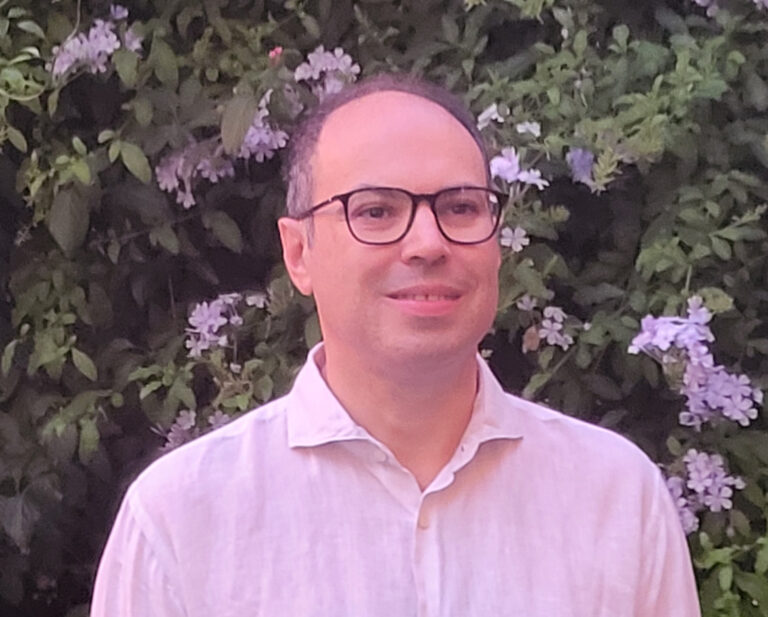
As of today, I have the honour of serving as President of our important scholarly community, following my election at the General Assembly held last October in the splendid setting of Rethymno. I succeed Claudia Marsico, Donald Morrison, and Gabriel Danzig, whose dedication and leadership have allowed the International Society for Socratic Studies to develop into a major point of reference for studies on Socrates and the Socratics. To them, and to our Honorary President Livio Rossetti, the founding father and guiding figure of our Society, we owe our deepest gratitude.
The conference in Crete, excellently organised by Chloi Balla, Gabriel Danzig, and Christopher Moore, vividly demonstrated the vitality of our field. Thanks also to the contribution of distinguished keynote speakers such as Douglas Cairns and Frisbee Sheffield, the meeting showcased the richness of contemporary Socratic studies, marked by a plurality of approaches and perspectives and by the intensity of the ensuing debates.
The Virtual Socrates Colloquium has by now become a well-established and highly successful initiative. An ambitious, high-level scientific programme, prepared by Gabriel Danzig and Francesca Pentassuglio, is already in place through June. Moreover, a new series devoted to Socratic studies at De Gruyter-Brill, associated with our Society, has recently joined the earlier series published by Academia Verlag.
All these positive developments encourage us to look to the future with confidence. At the same time, it would be inappropriate to overlook the fact that, over the past year, the Society has also experienced moments of significant tension, partly connected with a difficult and troubling broader political context. We hope that these difficulties now lie behind us, and we express the wish that the general situation may improve under the sign of peace.
For my part, I am firmly committed to keeping scholarly questions at the very centre of our collective life, as the shared focus of our scientific community. I am equally committed to fostering a greater democratization of the Society’s decision-making processes. I see my role very much as that of a primus inter pares, and I intend to carry out this task in close and full collaboration with the newly elected Executive Committee, chosen at the General Assembly in Rethymno. The Committee includes, alongside the former President Gabriel Danzig, Chloi Balla, Leo Catana, and Francesca Pentassuglio as representatives for Europe; Trinidad Silva and Vitor Milione as representatives for Latin America; Kirk Sanders and Emily Baragwanath as representatives for North America; and Noburu Notomi as representative for Asia, Africa, and the Rest of the World.
Regular meetings of the Executive Committee will be ensured, together with transparent and consistent communication with all members, including the circulation of minutes of discussions and decisions.
As established in Rethymno, the Society will soon convene a new online General Assembly, which will be called upon to deliberate on some important revisions to the statutes. This will represent a crucial democratic moment for the entire community.
A further priority will be the continued improvement of the Society’s website, so that it may serve as an even stronger point of reference both for the I.S.S.S. and for the wider community interested in Socratic studies. In this regard, sincere thanks are due to Ricardo Gancz for the excellent work carried out over the past three years.
Looking ahead to 2026, there is every reason to be confident that the Society will continue to flourish, sustained by the quality of its scholarship, the openness of its exchanges, and the shared commitment of its members.
Happy New Year!
Bonne année!
Ein gutes neues Jahr!
Buon anno!
Feliz Ano Novo!
¡Feliz Año Nuevo!
Michele Corradi
President of the International Society for Socratic Studies
Dear Gabriel,
I enjoyed reading your presidential report on ‘our’ ISSS, a vibrant reality that has a past and a future. This, despite the unpleasant sides of a recent past.
My thanksgiving to you and those who variously supported the life of the ISSS in these troublesome times.
I can only hope that the incoming president, Michele Corradi, will do his best to reinforce the system of relations among the members of the Society, and its vitality as a learned society.
Warm greetings to you as well to every other member of the ISSS.
Livio Rossetti
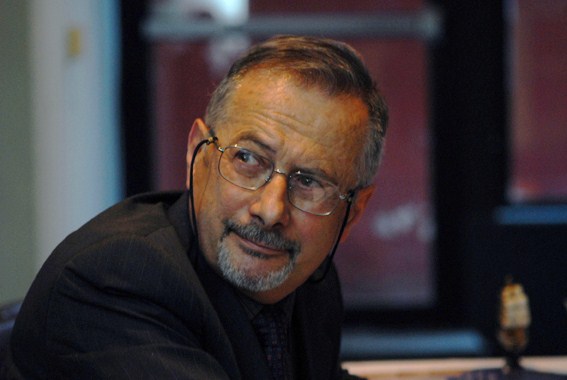
It has been a great honor to serve as President of the ISSS for the past three years and to have been nominated for this position by Don Morrison. I wish to share some of our accomplishments:
1) With the encouragement of David Konstan, obm, I organized a Socrates book series at de Gruyter Brill. The previous series at Academia Verlag suffered from production and visibility limitations and eventually required a publication fee. The arrangement with de Gruyter Brill represents an improvement on all of these fronts. While the series is not formally an organ of the Society, it provides a valuable venue for monographs, edited volumes, and conference proceedings on Socratic Studies. The editors include some great scholars of Socratic studies: Nick Smith, Louis-André Dorion and Alessandro Stavru among others. We have already published two volumes: a volume on Women in the Socratic Tradition, edited by Carolina Araújo, and my monograph on the two Socratic symposia. For links to these books see below. I am pleased to announce that the Socratica V volume, edited by Francesca Pentassuglio and Chloe Balla, has been submitted as well and we look forward to seeing it in print. Please keep the series in mind for high-quality monographs and collected volumes.
2) With the help of Dr. Ricardo Gancz we created a new website for the Society, independent of the previous website hosted by Rice University. Rather than relying on Bar Ilan or any other University we created a website that can be used continually by future presidents. The idea was to save future presidents, particularly those lacking in technical support from their universities, from the headaches involved in creating a new website. The website we developed can be transferred intact to the next President, while remaining fully open to future modification and improvement.
3) The Virtual Socrates Colloquium, which Don had previously managed on his own, became a genuinely collective effort. I thank Dave Johnson, Noreen Humble, Chloe Balla, Francesca Pentassuglio, and Dr. Milena Lozano Nembrot for organizing and moderating the Colloquium at various times. Over the past months I transferred full responsibility for the Colloquium to Francesca, and I wish her every success in carrying it forward! The Colloquium offers a great opportunity to hear new research on Socrates before it hits the journals, and all are welcome to participate.
4) A special thanks to Nick Smith for serving as a liaison to the APA. We welcome his replacement, Rusty Jones and wish him all success.
5) During my term, I also sought to strengthen the Society’s institutional practices.
a) For the first time, the executive committee held formal meetings online. b) We also held the first-ever contested presidential elections at the conference. For this purpose, I appointed an independent elections committee, in order to avoid any appearance of partiality. I thank Noburu Notomi, Susan Prince and Ricardo Gancz for serving on that committee in exemplary fashion.
c) I also initiated a discussion of possible revisions to the Society’s statutes, which had been adopted almost verbatim from those of the IPS. We made one important change at the General Assembly, and I trust that the new executive committee will bring that project to a successful conclusion.
6) I also convened a meeting of the diversity committee and after some discussion we adopted the following principles:
“The ISSS welcomes all individuals who share an interest in Socrates and the Socratic tradition. We are committed to fostering an inclusive and respectful environment regardless of race, gender, ethnicity, religion, national origin, handicap, or any other characteristic irrelevant to the study of Socrates.”
These may seem like obvious points, and I am sure we all take them for granted, but they need constant reinforcement, especially today.
7) My chief responsibility as President was to host the Socratica VI conference, originally planned for Bar-Ilan University. Because of the war, this proved impractical, and I agreed to relocate the conference to Crete. This move brought additional challenges, including a loss of funding, more complex organizational arrangements, and protests by a small number of local students. As a result of the last, I was forced to move my opening address to the end of the conference. But aside from that, these issues did not materially interfere with the academic success of the conference. The papers were great, discussions were focused, and many new friendships developed.
I am grateful to Christopher Moore, Chloe Balla, and Melina Tamiolaki for their work on the academic and planning committees, and to Kalliopi, Francisco, Evgenia, and Ricardo for their invaluable behind-the-scenes assistance. The University of Crete, Bar-Ilan University, the Lechter Fund for the Humanities, and especially the Socrates Foundation—under the leadership of Don Morrison—provided essential financial support. And of course, I thank all of you for helping to keep Socratic studies vibrant after more than 2,400 years.
Some people I had hoped to see and to introduce to a wider audience were unable to attend. These include Louis-André Dorion, one of my leading intellectual interlocutors in the study of Socrates, Margalit Finkelberg, a great expert not only on Homer but also on Plato, and David Konstan, obm. In addition to his great knowledge and wisdom, he was always a source of inspiration and congeniality at my previous events. It was a special honor to have Douglas Cairns and Dave Johnson join us for the entire conference. And it was a genuine pleasure to see how the Society has grown—from its modest beginnings as a series of conferences (for which we thank Alessandro Stavru, Fulvia de Louise and Livio Rossetti among others) into a lively international scholarly community—and especially to see Xenophon’s Socrates receiving the attention he deserves, including from many younger scholars. I could not have imagined, over 25 years ago, when I began to focus my research on Xenophon’s Socrates, that he would soon become a central fixture in the academic world. I especially credit Don Morrison and Louis-André Dorion, who preceded me in this, and Dave Johnson, who was a great collaborator throughout, for their tremendous contributions to bringing this about.
8) For the first time, I gave the conference a sub-theme: Socrates and the Emotions. In the lead-up to the conference, Milena Nembrot and I organized an online workshop on emotions in antiquity. We thank Douglas Cairns, Angelos Chaniotis, Pia Campeggiani, and Luuk Huitink for their outstanding presentations.
9) We discussed how to enable online participation by people who genuinely were unable to attend the conference in person. I suggested that people who spend time and money to attend a conference should not be asked, while there, to view online presentations by people unable to attend. Instead, we organized a one-day mini-conference online a week before the conference. I again thank Milena Nembrot for helping moderate that event.
10) My final responsibility as President is the organization of the conference volume. Most submission are expected to be in English, but some will be in other official languages of the Society. Several senior scholars have generously offered to assist with the editorial work, and I thank them warmly.
Clouds on the horizon
I cannot conclude this report without warning about an unfortunate development. As some of you know, a member of the committee disseminated defamatory messages about me both within the committee and beyond it. These communications were not merely personal attacks; they deliberately weaponized my nationality as a means of defamation. I am sure that most people understood that the accusations they contained were false, but it was still unpleasant to see the damage they caused to me personally, and the extent to which they undermined the trust and friendship that is necessary for collaboration in an academic society. In the end, the personal integrity of people in the Society is the most important bulwark against further episodes of this kind.
I am grateful for the friendship and solidarity shown to me over the years by many people, and I look forward to continued collaboration. I plan to organize a smaller conference in the near future on the theme “Moving the Elephant: Verbal and Non-verbal Techniques for Affecting Emotion in Socratic Literature and Beyond.” For those unfamiliar with the image, please consult chapter 2 of Jonathan Haidt’s The Righteous Mind. The idea is to present Socrates’ emotional appeals not as philosophical deficiencies but as masterful acts of emotional education. Please reach out if this meshes with your own research plans and if you wish to be part of this project.
I wish you all a happy and healthy New Year, and every success in your personal and professional endeavors. I bless the incoming president, Michele Corradi, and wish him a less eventful and more peaceful term of office, both within the Society and in the world as a whole, and look forward to working with him in arranging a smooth transition.
Sincerely yours,
Gabriel Danzig President, International Society for Socratic Studies
Books in the Socrates series:
Socrates at Play: https://www.degruyterbrill.com/document/doi/10.1515/9783111552125/html
Women in the Socratic Tradition: https://www.degruyterbrill.com/document/doi/10.1515/9783111692456/html
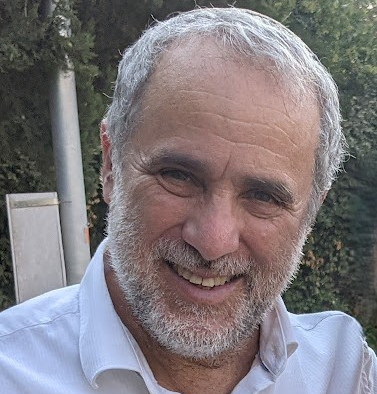
It is a special honor to have been proposed for this position by Donald Morrison, our current president. Don was, I think, the first person to champion the study of Xenophon’s Socrates in its current form. I am referring to the publication of “On Professor Vlastos’ Xenophon,” published in 1988. His many later publications on Socrates have set high standards in being original, rigorous, incisive, decisive, and persuasive; and they have had enormous influence. He is also one of the fairestminded, conscientious, and generous people I have ever met. As president of the Society Don set equally challenging standards. He greatly increased the society’s visibility, both by his prestige in North American circles and by his hard work. The series of online seminars he initiated brought the society to the attention of almost everyone working in this area in the entire world. And we all are grateful to him for organizing this fantastic conference!
I also want to mention some of the previous leaders of this group, Fulvia de Louise, Alessandro Stavru, and of course the founder of the entire concept, and honorary president for life, Livio Rossetti. Without them we would not be here today.
My job is to build on these foundations by encouraging projects that further the study of Socratic literature. I take a very broad view of what is included in Socratic Studies. To my mind it includes the so-called nonSocratic works of Plato and Xenophon. As members of the Socratic circle everything they wrote is fair game. To a lesser degree the same can be said of figures like Isocrates and Aristotle: if they were not members of the Socratic circle they were certainly in the Socratic orbit. What Socratic studies does is to provide a framework in which to investigate these writers, both as objects of study in themselves and as members of the Socratic movement.
My chief responsibility as president is to organize the next major Socrates conference. My plan is to hold a conference in Jerusalem in the spring of 2025. That is less than three years from now. This early date has two advantages. First, it means that no one needs to set aside their Socratic research. You can start working on your next project later this afternoon. Second, it means that the conference will be held before the next Plato society conference, which is, I think, a healthy arrangement.
I would like us all to think about fruitful new directions for Socratic studies. I hope our conferences will serve as catalysts for developing new directions of research in Socratic Studies. One area that calls out for investigation is the intersection between Socratic literature and emotiontheory. Recent volumes on Plato and the Emotions have been produced in English by Laura Candiotto and Olivier Renaut and in Italian by Francesco Benoni and Alessandro Stavru. Together with Tazuko van Berkel I organized a recent project on Xenophon and the Emotions which should see light in the next few years. I think it is time for a project on Socrates and the Emotions. Understanding how Plato and Xenophon, as well as the other Socratic writers, differ in their treatment of emotions will add a new wrinkle to the comparative study of these authors, and may provide new evidence for addressing long-standing problems.
For me this is a new subject of investigation. Only recently have I begun to appreciate how pervasive are the emotions in the Socratic corpus. The characters are constantly expressing emotions; emotions are part of what interests Socrates philosophically; and the authors of these dialogues had tremendous skill in engaging and arousing the emotions of readers. For this reason, and also because I may have access to funding for such a project, I would like to propose the emotions as a sub-theme for the next conference. This sub-theme is not meant to exclude any other subject. I expect that most papers will be on topics that already interest their authors, and that is as it should be. This sub-theme will simply add an extra dimension to the next conference and perhaps contribute in new ways to helping us understand Socrates and his influence.
I realize that I have only touched the surface of the imponderable questions that face us as a research society. The conversation should continue both online and in person, hopefully for many years to come. Thanks to all of you for your attention. I now hand the floor back to Don for the next part of the meeting.